
The global insurance sector is moving fast due to automation, data intelligence, and shifting customer demands. However, conventional insurance models tend to be characterized by slow claims, manual operations, and lack of transparency, which causes inefficiencies for both insurers and policyholders. This shift is fueling a push towards parametric insurance software development that enables faster decision-making and better operational efficiency.
Parametric insurance brings in a new concept whereby payments are automatically triggered under specific events or measurable data points. For carriers and MGAs, custom parametric insurance software development will enhance scalability, minimize risks, and offer improved customer experiences. It also helps to promote innovation along the new risk areas, which make insurance products more approachable and dynamic.
Understanding Parametric Insurance
Parametric insurance is a new form of insurance whereby the payouts are based on pre-determined parameters rather than the actual assessment of the loss. These parameters are some measurable events like rain levels, wind speed, change in temperature or system downtime. Once a predetermined limit is met, the policy will automatically pay out without any claims procedure.
This model is based on real-time information and automation, which ensures its high efficiency and transparency. It is independent of manual checks, paperwork and long verification processes. Consequently, insurers are able to make payment within a short time and lower the costs of operations.
How it works:
1. Policy creation with predefined triggers
A policy has specific parameters specified like weather conditions, seismic activities or operational downtimes. Such pre-established conditions are important to make the insurer and the policyholder aware of the time when payouts are going to occur.
2. Real-time monitoring and validation
Automated rules and algorithms compare incoming data with predefined trigger conditions continuously tracked on the platform. Moreover, the system validates events immediately when thresholds are met. As a result, it eliminates the need for manual inspection.
3. Automated claim initiation
Once a trigger condition is met, the system automatically triggers off the claims process without the involvement of a policyholder. Doing away with manual processes saves time and eases the entire process of the insured users.
4. Instant payout execution
Once systems verify the payout, they immediately process it through integrated digital payment or banking systems. Moreover, this approach ensures timely payments. As a result, policyholders receive their funds within minutes or a few hours.
Traditional vs Parametric Insurance
Traditional insurance emphasizes on actual loss compensation once it has occurred. It is a process that includes claim filing, documentation, damage assessment, and approval processes, which may require weeks or even months. However, parametric insurance is fast and simple, with payouts being determined by predefined conditions instead of being assessed on damages.
Parametric insurance also minimizes ambiguity as the terms are known in advance. When the policyholders are to receive compensation, they are aware of the time frame and the amount of compensation they are going to receive. Such a degree of transparency ensures confidence and customer satisfaction.
Parametric Insurance Model Market Size and Statistics
The parametric insurance market is growing very fast because of climate risks, digital transformation, and the need to have faster claims processing.
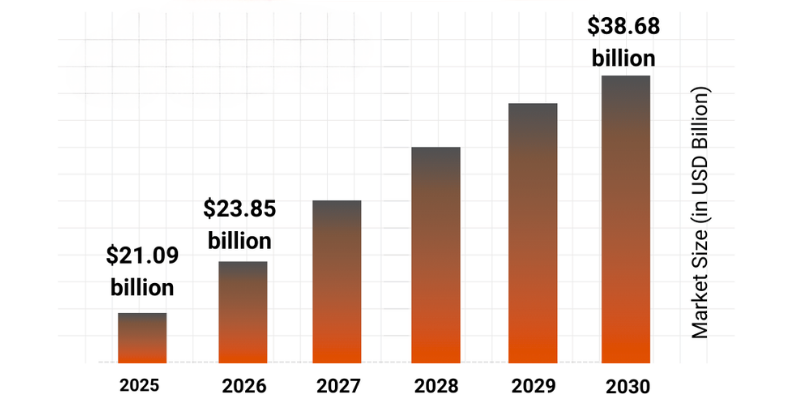
- The worldwide market will reach approximately $23.85 billion in the year 2026.
- It is estimated to increase by a CAGR of approximately 12-13% in the next 10 years.
- There are predictions that the market may climb to more than $50 billion by 2034.
- Parametric insurance comprises a small portion of the overall insurance market, but is growing quickly because of climate-related risks.
This growth leads to the direct demand of parametric insurance software development services as insurers modernize their technology stack.
Why Carriers & MGAs Are Adopting Parametric Insurance Model
Limitations of Legacy Insurance Systems
Conventional risk management frameworks are very inefficient in terms of the current risk landscape due to manual processes, old technology, and fragmented data storage systems. The speed at which claims are processed is slow and usually has several intermediaries. This leads to an increase in the operational costs and failure to satisfy the customers.
Need for Flexibility, Speed & Scalability
Modern insurers need systems that are able to respond to real time events and fast changing risk conditions. Parametric models will allow quick product launch and claims settlement almost instantly. By investing in the parametric insurance platform development, carriers and MGAs can scale their operations and remain competitive.
Support for Emerging Risks
New risks like climate volatility, cyber attacks and supply chain interruptions require very specific insurance coverage. There is a tendency that standard platforms cannot support such dynamic and niche demands. Custom systems allow the insurers to develop specific products and adapt to the changing risk environment.
Role of MGAs in the Parametric Insurance Ecosystem
Product design and innovation
MGAs are experts in designing niche products for insurance that are suitable to a particular industry, risk or group of customers. Their knowledge prepares them to develop parametric solutions at a faster rate and based on the derivations of real-world data triggers.
Underwriting expertise and risk selection
MGAs use extensive domain expertise and analytics to measure and price risks appropriately. They employ data-driven underwriting models to provide profitable coverage with competitive and flexible coverage structures.
Technology adoption and platform utilization
MGAs actively embrace new platforms driven by parametric insurance software development to simplify operations and automate workflows. Digital systems are used to manage policies, keep track of triggers and payouts.
Distribution and market access
To access specific customer groups, MGAs establish robust distribution channels via brokers, agents, and online platforms. Their collaboration makes it possible to expand the use of parametric products across various industries and regions.
Core Components & Features of Parametric Insurance Software
A robust parametric insurance software solution has have the following components:
Real-Time Data Integration
The platform integrates with third-party data services such as weather APIs, IoT devices and satellite to get real-time event data. Continuous data consumption guarantees proper monitoring of triggers and helps to make decisions promptly.
Policy Administration & Underwriting Modules
This component handles policy development, updates, renewal and underwriting processes with automated systems. It facilitates dynamic pricing and risk assessment on the basis of historical and real-time data entries.
Trigger-Based Policy Engine
A rules-driven engine specifies the state of conditions that cause a payout based on quantifiable parameters. It constantly analyzes incoming information and applies predefined logic to carry out automated policy responses.
Automated Claims Processing
When the trigger conditions are satisfied, claims are initiated and automatically processed. The system does away with paperwork and saves a lot of time on processing and administration.
Instant Payout Mechanism
Upon validation, payouts are done instantly using integrated payment gateways or bank systems. Quick payments enhance customer satisfaction and minimize the financial uncertainties in critical situations.
Fraud Detection & Risk Monitoring
High-tech algorithms and insurance fraud detection automation software follow the suspicious trends and highlight possible fraud cases. Constant observation assists insurers to control risks in advance and safeguard financial integrity.
Risk Modeling & Scenario Simulation
Advanced analytics provide simulation of different risk situations to evaluate possible exposure and pricing options. These insights enable insurers to come up with better and more competitive insurance products.
Multi-Source Data Validation
The system cross-examines data from reliable sources to ensure accuracy and reliability before triggering payouts. Moreover, this process reduces errors and strengthens decision-making. This strategy reduces errors and improves trust in automated decision-making procedures.
Dashboard & Analytics
The interactive dashboards offer real-time access to policy, claims, and risk performance on the platform. Visual analytics enable the insurers to make informed decisions and monitor key performance indicators effectively.
Compliance & Regulatory Management
Built-in compliance capabilities ensure that systems meet regional insurance regulations and standards across jurisdictions. Moreover, automated reporting and audit tools simplify governance processes. As a result, organizations reduce legal risks and maintain consistent regulatory compliance.
Multi-Channel Distribution Support
The platform helps in distribution via brokers, agents, online platforms, and embedded insurance ecosystems. Omnichannel capabilities provide a wider reach to markets and enhance accessibility for different customer segments.
Advanced Features for Modern Parametric Platforms
AI-based Risk Prediction and Pricing
Advanced AI models examine past history, environmental trends, and the behavioral patterns to determine the risk with high precision. This capability is often paired with AI claim management software development by many insurers to enhance pricing accuracy and automate workflows of automated decision-making.
Blockchain for Transparent Smart Contracts
With blockchain technology, tamper-free smart contracts can be developed, which automatically payout upon meeting the predefined conditions. Decentralized distribution of ledgers improves the transparency, minimizes conflicts, and creates confidence among all the stakeholders.
IoT Integration for Real-Time Event Tracking
IoT devices like sensors and connected systems are constantly recording environmental and operational data that is available from numerous sources. Live tracking enables insurance companies to capture the trigger events in real-time and respond to them without any delays.
Predictive Analytics for Loss Forecasting
Predictive analytics tools employ machine learning algorithms to predict probable losses according to historical and live data. This assists the insurers in actively dealing with the risks and maximizing underwriting strategies.
How Parametric Insurance Software Reduces Claims Fraud
Parametric insurance reduces the chances of fraud by focusing on predetermined data-driven triggers, rather than subjective loss determinations. Payouts are associated with quantifiable external information, e.g., weather, system outage, or earthquakes. This eliminates the possibility of submitting claims manually and inflating false reporting or exaggerated losses.
Automation strengthens fraud protection by authenticating events with trusted third-party data in real time. Moreover, it eliminates reliance on documentation or manual evaluation by triggering payouts automatically. As a result, auditable and transparent processes ensure that systems record all transactions accurately, and consequently, teams can quickly identify anomalies and maintain better control over operations.
Parametric Insurance Software Use Cases Across Industries
Agriculture and Crop Insurance
Farmers get payouts when they hit predefined triggers such as low rainfall, extreme temperatures or drought. Parametric insurance software development makes it possible to carry out automatic compensation, which helps stabilize the income and eliminates the dependence on slow process of claims.
Climate and Catastrophe Risk Coverage
Insurers design policies to trigger payouts based on quantifiable events such as hurricanes, earthquakes, floods, or wind speed levels. Moreover, this approach ensures faster, data-driven claim settlements. Fast disbursement enables businesses and governments to recover faster in the event of a major natural disaster.
Travel Delay and Event Cancellation Insurance
Insurers offer automatic payouts to travelers when flight delays exceed predetermined limits or cancellations occur due to unexpected events. Moreover, this approach ensures faster claim settlements and improves customer satisfaction. Real-time data integration ensures smooth processing that does not need manual claim submissions or similar supporting documents.
Cyber Downtime and Infrastructure Disruption Coverage
Businesses receive compensation once the system outages, cloud disruptions, or cyber malfunctions surpass set downtime limits. Immediate compensation can enable organizations to recover fast and reduce both financial loss and operations due to the failure of digital infrastructure.
How Carriers & MGAs Can Monetize Parametric Insurance Products
Event-based Offerings
Carriers and MGAs can create special products which will payout based on clearly determined events like weather disruptions, delays or outages. Fast payouts and increased transparency allow premium pricing.
Embedded Insurance
Parametric products can be embedded by insurers into digital platforms like travel, e-commerce, or fintech applications. Strategic alliances facilitate easy distribution and open new sources of income based on a high volume and low friction sales.
On-demand Coverage
Parametric insurance offers flexible cover which only comes into effect when required like during travel, events or certain operational periods. This model appeals to modern customers who want affordable and tailor-made insurance services.
Specialty Risk Expansion
Carriers and MGAs are able to penetrate markets that traditional insurance is failing such as climate risks, cyber threats, and supply chain disruption. Parametric models make underwriting easier, allowing profitable coverage in areas of risk that were underserved before.
Custom vs. Off-the-Shelf Parametric Insurance Software
Limitations of pre-built solutions:
Scalability Challenges
Ready-to-use systems are typically not tailored to specific applications and may struggle with more data or complicated processes. These constraints may limit long-term growth and efficiency of the system in heavy workloads.
Limited Customization Capabilities
Off-the-shelf platforms have predefined features and set workflows that might not match distinctive business needs. Consequently, insurers find it difficult to come up with customized products even as the parametric insurance software development continues to grow in demand.
Integration Constraints
Most off-the-shelf solutions are not flexible in terms of their integration with third-party APIs, legacy systems or sophisticated data sources. Lack of integration results in ineffective systems and low efficiency.
Regulatory Limitations
Ready-to-use platforms can be not perfectly adjusted to region-specific laws or changing compliance standards. Misalignment in regulation may slow down product rollouts and introduce extra compliance burdens.
Benefits of custom parametric platforms:
Enhanced Scalability and Performance
Custom-built systems are capable of supporting massive processing and real-time data management without holding back the performance. Powerful architecture will guarantee stable performance as the business processes continue to evolve.
Tailored Functionality and Workflows
Specialized platforms will be tailored to fit a given business model, underwriting strategy, and product need. This is why highly targeted and competitive insurance solutions can be designed with custom parametric insurance software development.
Seamless Integrations and Flexibility
Custom solutions enable easy integration with external data providers, IoT systems and enterprise platforms. Enhanced flexibility assists the insurers to build cohesive ecosystems and simplify complicated workflows.
Improved Compliance and Governance
Custom platforms may be developed with compliance regulations and governance frameworks tailored to a region. In-built compliance features lessen risks and makes regulatory control easier.
Flexibility, compliance, and scalability advantages:
Adaptability to Evolving Risks
Custom solutions also allow insurers to rapidly realign products and parameters in response to evolving risk settings. Quick adjustability promotes innovation and enables insurers to address new challenges efficiently.
Future-ready Architecture
Custom builds embrace innovation, feature additions, and continuous upgrades with the help of modern technologies. A future-ready strategy enhances long-term competencies in line with parametric insurance platform development.
Better Control Over Operations and Data
Custom platforms allow the insurers to have complete control over system logic, workflows and data management processes. Better control will increase the transparency and reinforce governance in insurance operations.
Parametric Insurance Software for Specialty & Hard-to-Insure Risks
Climate Volatility
The problem of climate uncertainties is on the rise and this renders the conventional insurance models inefficient in the evaluation and the pricing of risks associated with floods, hurricanes, and droughts. Advanced insurance software development services enable parametric platforms to activate instant payment on the basis of environmental information, guaranteeing recovery fast.
Supply Chain Disruptions
Geopolitical activities, transport, and port overcrowding are common causes of disruptions in global supply chains, making the process of loss assessment complicated and time-intensive. Parametric insurance involves the use of specific predetermined triggers such as delay period or shipment interruption to automate the payouts and to ensure continuity of operations.
Emerging, Non-traditional Risks
Cyber attacks, pandemics, and infrastructure outages are new types of risks that cannot be easily measured with traditional insurance models. Parametric platforms make use of real-time information and established metrics to provide dependable coverage where conventional insurance frameworks fail.
Cost to Develop a Parametric Insurance Model
Basic Parametric Insurance Platform
A basic project of parametric insurance software development would require between $50,000 and $120,000, depending on the basic functionality and limited integrations. It includes simple trigger-based policies, bare dashboards and minimal third party data integrations.
Mid Level Parametric Insurance Platform
The average cost of a parametric insurance software in mid-level is usually between $120,000 and $300,000, based on integrations, automation, and customization requirements. It is scalable, has a superior user experience, and enhanced security, which makes it suitable for growing carriers and MGAs.
Advanced Parametric Insurance Platform
A complex custom parametric insurance software development project will cost between $300,000 and $1M or more based on AI capabilities and enterprise-grade architecture. It is highly scalable, automated, and secure, making it perfect in the context of large insurers that deal with global and specialty risks.
Compliance & Regulatory Considerations for Parametric Insurance Software Development
Regulatory Acceptance of Index-based Products
Regulatory bodies accept parametric or index-based insurance products differently across regions based on market maturity and readiness. Moreover, these variations influence approval processes and implementation strategies.
Clarity in product structures and predetermined triggers enable regulators to assess fairness, reliability, and consumer protection standards more effectively.
Transparency Requirements
Insurers need to explain the operation of triggers, data sources, and payout mechanisms clearly to maintain a clear understanding of the policies. Organizations use clear and explainable frameworks with documentation to build trust and meet regulatory demands. Moreover, this approach improves transparency and supports compliance efforts.
Compliance Challenges
Operating in different regions, it will be required to adhere to the various legal frameworks, licensing policies and data security laws. Regulatory complexity and localized settings allow insurers to stay in line with regulatory requirements and prevent possible law or financial risks.
Security & Data Privacy in Parametric Insurance Software
Secure Third-party Data Integrations
Parametric platforms are also very dependent on third-party sources of data like weather APIs, IoT sensors and satellite feeds to verify the accuracy of the trigger. Sensitive data is secured in transit by good API security, authentication, and encrypted communication channels.
Encryption, Access Controls & Audit Trails
Sensitive information like policy details and records of transactions requires advanced encryption standards to keep the sensitive information secure during rest and transit. Role-based access controls and audit logs provide a high level of control over access to data with full traceability.
Cloud Security Best Practices
Organizations must establish strict security policies like network isolation, identity management, and continuous monitoring in cloud infrastructure. Moreover, these measures protect systems and ensure consistent security across environments. Regular security audits, vulnerability scans, and compliance audits contribute to a secure and resilient environment of insurance operations.
Why Choose A3Logics for Parametric Insurance Software Development
20+ Years of Proven Insurance Domain Expertise
A3Logics has over 20 years of experience in providing superior insurance technology services. The company’s domain knowledge assists in creating scalable and efficient parametric platforms.
Compliance-First Architecture & Governance
A3Logics adheres to a compliance-first strategy as it develops platforms in accordance with the global and regional insurance regulations. Well established governance systems guarantee data integrity, transparency and compliance with legal changes.
Scalable, Cloud-Native & Future Ready
Recent solutions designed by A3Logics use cloud-native architecture to facilitate scalability, performance, and real-time processing. Future ready systems are flexible to the emerging technologies, increased data volumes and market demands.
Custom-Built, Regulation-Ready Parametric Platforms
A3Logics focuses on parametric insurance software development that is tailored to specific business model and regulation environments. Bespoke platforms are flexible, easily integrable, and compliant with the region-specific standards.
Conclusion
Parametric insurance is revolutionizing the insurance industry by enabling speedy payments, enhanced transparency, and simplified procedures. It does away with the time wastage incurred in handling the claims and loss assessment manually and thus the insurers are able to react to what is happening on the ground. This shift helps carriers and MGAs to improve the customer experience and decrease the complexity of operations.