Alternative dispute resolution has transformed the way conflicts are resolved. Where earlier it was an alternative to lengthy court battles, it is now a strategic part of the modern legal system since it offers a calmer, faster, and more collaborative way to reach closure.
At places where time, cost, privacy, and most importantly, relationships matter, ADR methods help people and businesses resolve disputes. Talking of which, as disputes grow in complexity and scale, AI-based Alternative Dispute Resolution software is gaining ground. These systems reduce the scope of human errors while facilitating a platform where all the parties can manage their proceedings and, at the same time, expect fair outcomes.
If you are someone planning to implement or develop such systems, you have come to the right place. Here we will walk you through the basics, the various benefits, and a step-by-step guide on how you can create, deploy, and optimize an effective ADR software solution for your organization.
What is an Alternative Dispute Resolution?
Alternative Dispute Resolution (ADR) refers to the methods of settling conflicts outside of traditional court litigation, using neutral third parties like arbitrators and mediators. They help parties reach a mutually agreeable settlement often faster, more confidentially, and less expensively than a trial. Key types include mediation and arbitration.
Why ADR Software Development Matters in the Digital Age?
As is demonstrated in the use cases of AI in the legal industry, AI-based Alternative Dispute Resolution systems are revolutionizing how disputes are resolved using technology. AI in ADR helps choose better mediators, speeding up dispute resolution. The systems support fair outcomes by reducing human bias and applying consistent decision-making criteria. Here are some numbers that highlight the growing impact and adoption of AI in modern dispute resolution –
- 58% of law firms have adopted AI tools in their workflows.
- The global Alternative Dispute Resolution services market size is anticipated to be worth USD 34.52 Billion in 2026 and is expected to reach USD 69.83 Billion by 2035.
- According to the SIDRA International Dispute Resolution Survey 2024, 75% of respondents were satisfied with mediation as an effective resolution method.
- 91% of respondents expect to use AI for research and data analytics within the next five years.
- 45% of law firms surveyed are exploring AI applications for Alternative Dispute Resolution, aiming to streamline processes
Types of Alternative Dispute Resolution Software
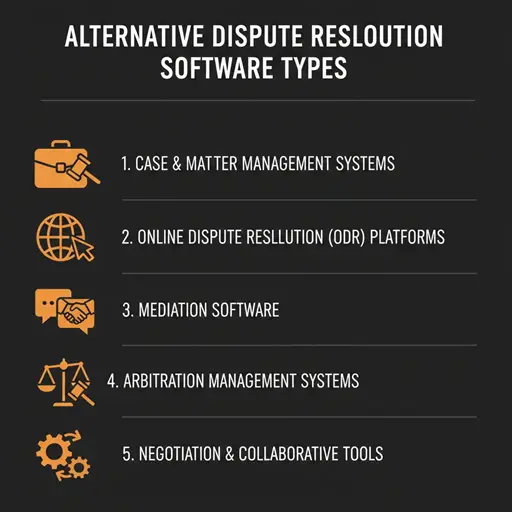
1. Case & Matter Management Systems
Alternative dispute resolution software are designed in a way that they track and manage details related to a specific dispute or legal case. The software are used by legal professionals; to handle documents, deadlines, workflows, and communication.
2. Online Dispute Resolution (ODR) Platforms
An online Alternative Dispute Resolution system; lets parties resolve disputes remotely using tools such as chat systems, video conferencing; and electronic document sharing. The platforms incorporate various ADR methods such as mediation, negotiation, and arbitration.
3. Mediation Software
Mediation software is a kind of Alternative Dispute Resolution software that supports a mediation process. Here a neutral third party, also known as a mediator, helps disputing parties negotiate and communicate a mutually acceptable solution.
4. Arbitration Management Systems
These systems make Alternative Dispute Resolution ADR simple by streamlining the entire arbitration process. It streamlines processes; such as case filing and final awarding by centralizing administration and automating tasks.
5. Negotiation & Collaborative Tools
Under ADR software development, negotiation, and collaborative tools are used to facilitate communication between parties, so that they can settle without the involvement of a third party. This software facilitates communication via chat, email, etc, and parties can manage their discussions.
Benefits of Alternative Dispute Resolution Software
1. Faster Case Resolution
Using automated tools, an Alternative Dispute Resolution attorney automates administrative tasks, which helps resolve cases in weeks. The software reduces the time; from filing a dispute to reaching a settlement; avoiding court backlogs and extensive procedural steps associated with traditional litigation.
2. Centralised Case & Document Management
An Alternative Dispute Resolution software creates a secure online repository; for all case-related documents, evidence, schedules; and communication logs. This removes the need for large paperwork; ensuring easy retrieval of information and access to information.
3. Scalability for High-Volume Disputes
Alternative dispute resolution attorney uses software; designed to handle a growing number of cases by leveraging cloud computing and adding resources.
4. Consistency & Fairness in Outcomes
An Alternative Dispute Resolution system can incorporate features that maintain standardized guidelines, procedures, and access to qualified neutral third parties. This approach; together with a clear trail of communications; ensures a fair process.
5. Regulatory Compliance & Audit Readiness
During ADR software development; regulatory compliance and audit readiness are integral aspects. To ensure these; there are built-in features such as audit trails, secure data storage, etc. These features help organizations comply with regulatory requirements.
6. Cost Efficiency
Using an ADR software, an Alternative Dispute Resolution attorney can reduce the time required for resolution, minimizing the need for physical meetings. Since the software also lowers operational and legal costs, it leads to cost efficiency.
7. Improved Transparency
An Alternative Dispute Resolution software provides a clear audit trail of all actions, submissions and communications exchanged during the process. This provides a more accurate picture of case progression for all participants.
8. Enhanced User Experience
Alternate dispute resolution software provides a user-friendly, often cloud-based and accessible, interface that simplifies the dispute resolution process for all involved parties (clients, legal professionals, and neutrals).

Core Features of Alternative Dispute Resolution Software
1. User Registration And Role-based Access
Using this feature of an Alternative Dispute Resolution software, participants can create secure accounts. The software defines different levels of access and permissions based on their role, for e.g. administrator, mediator, arbitrator, etc.
2. Case Intake And Dispute Classification
This functionality of an Alternative Dispute Resolution; system initiates new cases through standardized digital forms. It provides all necessary initial information; and facilitates categorization of disputes.
3. Secure Document Upload And Management
This feature provides a secure portal for parties – to upload, store, and share all relevant case documents. It also enforces robust security measures; such as protection of information. Other aspects include version control and the elimination of physical paperwork.
4. Scheduling And Calendar Management
The feature of an Alternative Dispute Resolution software includes integration with popular calendar applications such as Outlook or Google Calendar. An ADR software comprises of centralized system; for coordinating and scheduling all case milestones such as meetings, hearings and deadlines.
5. Communication Tools (Chat, Video, Notifications)
Modern ADR software integrates various communication methods; such as chat video conferencing and notifications to facilitate interaction within the platform. Alternative dispute resolution lawyers and their clients; can attend mediation sessions.
6. Case Status Tracking And Reporting
This feature provides a transparent dashboard; or summary page where all participants can monitor the progress of a case through its various stages. Administrators can use this data; to track case timelines, analyze the performance of their mediators or arbitrators.
Advanced Features for Modern Alternative Dispute Resolution ADR Platforms
1. AI-powered Case Analysis For Predicting Outcomes
Modern Alternative Dispute Resolution software are powered with AI-powered case analysis to analyze vast datasets; of past cases, legal precedents, and case-specific variables such as arguments, evidence, applicable laws, etc. This feature helps parties and neutrals to make more informed decisions.
2. Smart Mediator/arbitrator Matching
With the help of AI algorithms in an Alternative Dispute Resolution system, attorneys can analyze the specifics of a dispute. These include case type, industry, complexity, etc. The software uses these insights to match the case with the most suitable mediator or arbitrator.
3. Automated Settlement Suggestions
Alternative dispute resolution ADR use AI and NLP to interpret what each party wants by analyzing their documents and messages. The system highlights key disagreements, suggests fair compromise options and settlement ranges and supports structured discussions.
4. Video Conferencing With Recording
An Alternative Dispute Resolution attorney can make use of modern video conferencing tools to facilitate remote hearings and meetings. Both clients and attorneys needn’t conduct physical travel and record sessions securely.
5. Blockchain-based Audit Trails
Alternative dispute resolution lawyers can leverage the blockchain functionality of an ADR software. The blockchain audit trails lock every action into a permanent, verifiable record. This means that the evidence cannot be tampered; and all parties are accountable.
6. Multi-language And Cross-border Support
Alternative dispute resolution software support multilingual communication through features; like real-time AI-driven translation services. They also accommodate diverse legal systems and cultural norms; thereby, breaking down geographical barriers.
Technology Stack for ADR Software Development
A reliable tech stack ensures performance and security:
- Frontend: React, Angular, Vue.js
- Backend: Node.js, Python, Java, .NET
- Database: PostgreSQL, MongoDB
- Cloud: AWS, Azure, Google Cloud
- Security: OAuth 2.0, SSL, encryption protocols
- AI Tools: NLP, ML frameworks like TensorFlow
Alternative Dispute Resolution Software Development Workflow: Step-by-Step
A legal software development company undertakes the following steps during Alternative Dispute Resolution software development –
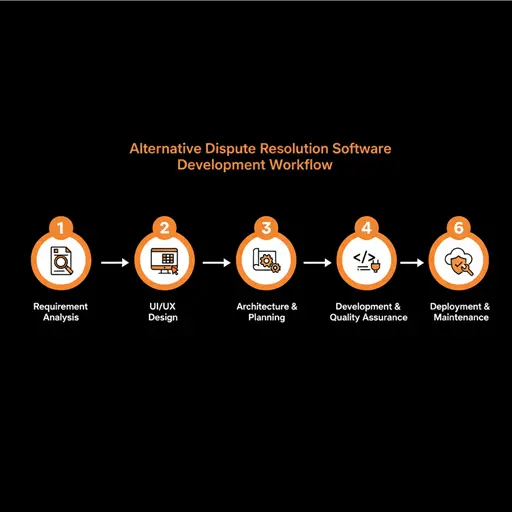
Step 1: Requirement Analysis
At this step, developer swork closely with legal experts, mediators, and other users to find out what the ADR software needs to do. They identify key features such as secure document uploads, scheduling tools, video calls, etc and ensure that the system follows all legal rules.
Step 2: UI/UX Design
The designers create how the software would look like and what it would be like to work on the software. The aim here is to have a simple design that users can use with ease. The designers build wireframes, prototypes, and navigation flows, using which users can upload evidence, communicate and schedule sessions while meeting standards.
Step 3: Architecture Planning
At this stage; the developers design the technical structure. They decide on the programming languages; databases, cloud services, and security measures. They also plan how different components such as e-signatures; or payment systems work.
Step 4: Development & Integration
At this stage; the actual coding takes place. Developers program the features defined in the requirement analysis. They build user management modules; and implement dispute resolution functionalities; such as case management systems, workflows, video conferencing tools, mediation modules, and more.
Step 5: Testing & Quality Assurance
At this stage; testers conduct functional testing, security audits, performance testing, and user acceptance testing with real feedback. They test the system’s limit to find; and fix issues. This crucial step ensures; that the Alternative Dispute Resolution software; is free of bugs.
Step 6: Deployment & Maintenance
Finally, the system is made available to end-users; and ongoing support is provided to keep it running without any issues. In this phase, users are trained, and security patches are released in order to keep the system running securely and efficiently.
Alternative Dispute Resolution Software Examples
1. Tyler’s Alternative Dispute Resolution Software
This platform lets entities manage informal workplace and public disputes. It streamlines processes like mediation, and arbitration, tracking cases from intake to resolution. It ensures compliance and provides data for reporting often integrated with broader court and HR systems.
2. New Era ADR
New Era ADR is a Chicago-based, fully virtual Alternative Dispute Resolution (ADR) platform that uses technology to quickly resolve legal disputes. It manages the entire dispute process online – from filing to resolution. It aims to resolve disputes within 60-100 days. New Era ADR provides a SOC2 compliant platform for document management.
3. ADR Notable
ADR Notable is a specialized, cloud-based software platform for Alternative Dispute Resolution professionals like arbitrators, and mediators. It is designed to manage the entire lifecycle of a case, right from client intake and scheduling. It uses AI-powered tools to secure document management and note-taking.
4. Immediation

Immediation offers an online platform for Alternative Dispute Resolution . It’s aim is to digitize and streamline the process of mediation and arbitration. It offers services such as case management, automated intake, online hearings and tools for arbitration centers and mediators.
Role of AI and Machine Learning in Alternative Dispute Resolution System
1. Automated Case Intake & Classification
Alternative dispute resolution system ADR incorporates; AI and machine learning to streamline the initial stages of processing a new dispute. The system automatically handles submission; screening and categorization of cases.
2. Intelligent Document Analysis
With the help of AI and Natural Language Processing, Alternative Dispute Resolution (ADR) rapidly reviews, summarizes, and extracts key information from vast legal documents (contracts, emails, and precedents). This way, it identifies inconsistencies, automates tedious task,s and flags crucial evidence.
3. Predictive Analytics for Dispute Outcomes
In ADR software development, AI algorithms analyze historical case data, legal precedents, and mediator behavior to forecast likely outcome. Using these insights, parties can assess their positions in a better manner and make informed decisions.
4. AI-Assisted Negotiation & Settlement
AI and ML-assisted ADR system help parties reach agreement by analyzing past cases, communications, and documents. It takes into account each party’s preferences, interests and likely positions. It subsequently highlights key points of disagreement and suggests possible compromises.
5. Virtual Mediation & Arbitration Support
AI in ADR provides the infrastructure for virtual hearings. This also includes real-time transcription; and translation services. AI tools also assist mediators and arbitrators; with research and case management; providing decision support and allowing humans to focus on the nuanced, emotionally charged aspects.
6. Sentiment & Behavioral Analysis
When there is a communication between parties; AI-powered Alternative Dispute Resolution systems can interpret emotional queues – intentions, and language patterns. This helps mediators; identify potential areas of compromise.
7. Bias Reduction & Fairness Monitoring
AI and machine learning systems base their judgement based on data-driven criteria. Hence; when analyzing disputes, they reduce the influence of personal emotions or unconscious human bias and evaluate patterns and facts . Additionally, AI models can be audited and monitored for bias in their training data and output.
8. Automated Drafting of ADR Documents
Automated Drafting of documents means using AI to automatically prepare routine parts; such as case summaries, timelines of proceedings; and standard legal clauses.

The Future of Automated Dispute Resolution Software
The future of automated dispute resolution software will have significant advancements – driven by the integration of technology and artificial intelligence. Here are some key trends and developments that you can expect –
- Smart contracts will automate agreement execution. They will reduce disputes; by making obligations tamper-proof which means; they can’t be altered.
- AI tools will flag off anomalies in cases, documents, and workflows, letting mediators and arbitrators detect errors and inconsistencies.
- The hybrid system, consisting of digital platforms, video conferencing, and human oversight, will allow real-time interaction between parties, mediators and other neutrals.
Why is A3Logics the Right Choice for Alternative Dispute Resolution Software Development?
A3Logics develops Alternative Dispute Resolution systems that simplify case management and facilitate seamless collaboration through reliable custom software development services. The platforms are; intuitive, secure, and adaptable for modern legal workflows.
With expertise in AI law firm app development; these solutions reduce human errors, improve accuracy, and support structured decision-making helping legal teams resolve disputes faster.
Conclusion
As we explore the future of dispute resolution; Alternative Dispute Resolution powered by technology can make legal cases faster, fairer, and more efficient. If you are considering automated dispute resolution software; this post covers various aspects, including the types, step-by-step workflow, benefits, and practical applications. By leveraging AI; digital platforms, and smart tools, ADR systems are shaping the way disputes are resolved; reducing errors, saving time, and improving outcomes for all participants.