Industry 4.0 is an era of connectivity, advanced analytics, automation, and manufacturing technologies that have been transforming businesses worldwide for years now. This wave of change has spread far beyond the manufacturing sector and holds unimaginable potential for operations and the future of production.
HMI (Human-Machine Interface) through the change of mere facts into clear visual images, becomes a digital link between humans and complicated industrial machines & systems. It allows operators to monitor, optimize, and control the manufacturing processes.
Unlike traditional software focused mainly on data processing, HMI software prioritizes operator safety and rapid data visualization. It also works seamlessly with industrial hardware and software. Therefore, it serves as a distinct industrial application rather than a typical business tool.
We will discuss in this blog how organizations can use custom HMI software development to make a shift from hardware to software-centric technology and how an AI development company can help with HMI development services.

What is HMI Software?
Human-Machine Interface (HMI) software is the program that connects humans with machines in a manner that enables system operators to check, regulate, and fine-tune the industrial processes on a live basis. HMI software takes the data to be processed from the digital meters, machines, and the command systems and displays the same through user-friendly consoles, line graphs, and warning systems.

As per market research future analysis, the HMI software market was valued at USD 4.7 billion in 2022 and is projected to grow from USD 5.1 billion in 2023 to USD 8.6 billion by 2030, with a CAGR of 7.8% during the forecast period.
HMI software operates across production areas, energy stations, homes, and vehicles. It gives operators clear visibility into system performance. Moreover, it converts complex machine data into simple, understandable insights. This improves safety, boosts process efficiency, and makes overall management easier.
Why is HMI Software Development Important?
HMI software development plays a key role in automation. It simplifies communication between humans and machines. In factories, workers use automation software to control processes and monitor equipment. They also respond quickly to system warnings. Moreover, this direct interaction helps them maintain optimal operations. It also enables them to resolve issues more efficiently.
In consumer settings like homes and cars, HMI enables smooth and easy product interaction. It combines human input with AI-driven systems. This integration improves precision, enhances safety, and strengthens control. These benefits make technological advancements highly valuable for industries.
Enhanced Efficiency Through Advanced HMI Capabilities
New HMI software uses data-driven visualization and AI-powered analytics. These tools help operators work faster and stay well informed. The online unit also predicts problems in advance. It detects issues that could cause long-term inefficiencies.
The enhanced convenience and improved user experience of modern equipment interfaces place operators at the center, giving priority to the most critical alarms. This approach minimizes human error and strengthens overall safety. Moreover, these two factors are closely interconnected: reducing human mistakes directly boosts safety, and increased safety further reduces errors. As a result, performance improves significantly, supporting more accurate and confident decision-making.
B2B operations follow different workflows and require specific data. This makes customizable and scalable HMI software essential. A flexible HMI setup adapts to various machines and production lines. It also supports user tasks with accurate and clear data interpretation. Scalable architectures also enable smooth IoT-platforms, cloud infrastructures, and up-to-date technologies interactions as the business evolves. Such adjustments assist organizations with the automation-exchange future to be secure in addition to overtime account savings and maintenance simplification.

Key Benefits of HMI Software Development
1. Real-Time Data Visualization
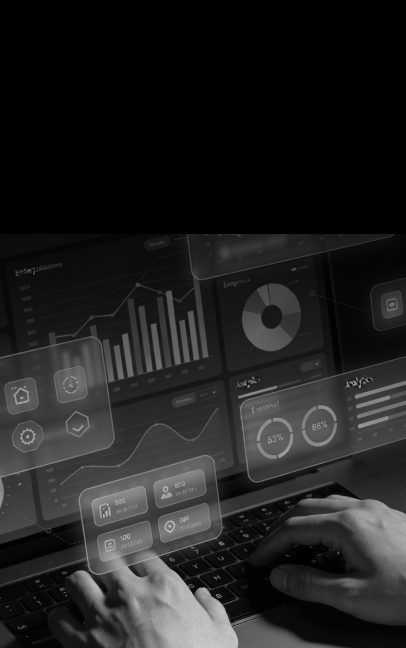
HMI software gives operators interactive dashboards that display real-time data from machines and sensors. This real-time view helps users spot slowdowns quickly. It also helps them detect abnormal situations instantly. As a result, they keep the system running efficiently. HMI converts data into visual outputs like charts, meters, and trend lines. This makes decision-making faster and more reliable.
2. Integrated Analytics
Contemporary HMI installations are supplemented with advanced monitoring analytics which in fact leads monitoring to a higher level. They closely examine the performance of the machines, production capacity, and even the trends of the downtimes and thus generate various actionable insights. These insights enable organizations to optimize production schedules, anticipate maintenance needs, and maximize overall equipment effectiveness (OEE). Moreover, they allow businesses to implement intelligent operations not only at the local level but also across the entire enterprise.
3. Remote Monitoring
HMI software enables remote access through advanced connectivity and IoT integration. This allows operators to track system performance remotely. They can also receive alerts from any location. They can make necessary changes without being on-site. This feature increases flexibility and speeds up responses. It also reduces costs by lowering downtime and travel expenses.
4. Security Enhancements
One of the major threats that industrial environments face is in their security systems aspect which becomes more connected in nature. Industrial automation software can also come with security attributes such as a control of different roles’ access, a secure connection, and activity monitoring device aiming at the protection of the highly valuable operational data in question.
The security measures embedded in HMI software limit system access and modifications to only authorized users, thereby reducing vulnerability to cyberattacks. Moreover, these safeguards further lower the risk of the system being tampered with through illegal means.
5. Intelligent Alarm Management
One key feature of custom HMI software is intelligent alarm management. It highlights critical alerts and reduces false alarms. This gives operators enough time to respond effectively. The system also groups alarms by their importance and context. This helps operators focus on major safety and production threats. As a result, plants achieve faster issue resolution and higher overall reliability.
Application of HMI Software Development
1. Industrial Automation: Manufacturing, Robotics, and Production Line Monitoring
In a production facility, the need for HMI software comes as it is the basic point of contact among all the automation systems. The same software also grants the possibility of production data visualization, robotics systems operation, and factory equipment checking. When developing these automation interfaces, many teams rely on quick turn pcb assembly services to rapidly prototype control boards and sensor interfaces, ensuring that industrial processes remain efficient, have controlled downtime and the whole operation is at the highest level of precision.
2. Healthcare and Medical Devices: Real-Time Patient Monitoring and Device Interfaces
By implementing HMI solutions in healthcare, clinicians can elevate patient safety and improve their own effectiveness. These advanced medical device interfaces enable professionals to monitor vital signs, adjust device settings, and receive immediate alerts. HMI also plays a great role in designing the device which in turn guarantees patient safety by being accurate, reducing the occurrence of mistakes and contributing to the quality of care delivery.
3. Automotive Dashboards: Smart Infotainment and Digital Cockpit Systems
HMI development is driving major positive change in the automotive sector, equipping cars with interactive dashboards and infotainment systems that ultimately make them more efficient and safer. Starting from the usage of the touchscreen and the voice control to the truly smart navigation and vehicle health tracking, HMIs turn into a must-have for car drivers as these keep them informed and entertained in an easy, safe, and non-interruptive way.
4. Energy and Utilities: Smart Grid Management and Predictive Maintenance
The implementation of HMI software is the key element in any energy management system, offering assistance to power plants and utility companies to keep tabs on the grid performance, be in control of the status of the equipment, and forecast maintenance requirements. By engaging real-time analytics and user-friendly interfaces, the staff can access the vehicle to conserve the energy resource, avert breakdowns, and guarantee uninterrupted delivery to customers.

Innovations in HMI Software Development
1. AI and ML Algorithms
Artificial Intelligence (AI) and Machine Learning (ML) are changing the way HMIs recognize and respond to user behavior. These techs make it possible for interfaces to predict, learn from user actions, optimize workflows, and even identify system failures that will happen in the future. By adopting AI-driven HMIs equipped with intelligent automation and self-learning features, industries can not only increase efficiency but also enhance safety and improve the overall user experience.
2. Multimodal Interactions
Currently, HMI systems can use different multimodal methods such as touch, voice, gesture, and even eye-tracking to become more accessible and responsive. This breakthrough guarantees that humans and machines can communicate flawlessly, thus users are able to handle complicated systems in a more natural and instinctive way. The implementation of multimodal technologies is very significant in situations where it is necessary to operate without using hands or in a remote way.
3. AR and VR Interfaces
Augmented Reality (AR) and Virtual Reality (VR) constitute the future of HMI by providing new ways of visualization and interaction that are immersive. For example, a technician can get an overlay from AR to help with machine diagnostics, while VR can be used to simulate the real environment for operator training. Both these technologies help solve the problem of the gap that exists between digital data and physical assets, thereby giving a better understanding of the situation and facilitating decision-making etc.
4. Edge Computing
With edge computing, the processing of data is done very close to the source and therefore latency is very low and the system can respond to the HMI in almost real-time. The local analysis of critical data allows HMIs to work efficiently even when the internet connection is weak or unavailable. This is a very significant innovation for the automation of industries, self-driving cars, and remote field operations where the making of decisions in real-time is vital.
Future Trends in HMI Software Development
1. ERP Integration for Data Personalization
In the future, HMIs will increasingly integrate closely with Enterprise Resource Planning (ERP) systems, thereby delivering more personalized, context-aware data and insights. Such integration gives access to customized dashboards, real-time inventory, and performance metrics inside a single interface to operators and decision-makers, thereby enabling them to make more informed and data-driven decisions.
2. IIoT & Smart Ecosystem with Real-time Analytics
When the HMI gets together with the Industrial Internet of Things (IIoT), the result will be a smart ecosystem which is interconnected. With IoT development services, continuous analytics along with the integration of sensor data will be the enablers of predictive operations, automated control, and heightened visibility across production lines, thereby making the industrial processes more agile and intelligent.
3. Real-time Machine Control & Predictive Maintenance
HMI software development will be the source of power for the operators enabling them to visually verify and physically command the machines with more accuracy and in a shorter time span. These machines, when combined with predictive analytics, are going to be able to anticipate upcoming mechanical faults and suggest actions to be taken to avoid them which in turn will lead to less downtime and lower maintenance costs.
4. AI-Powered Adaptive Interfaces
The AI-powered adaptive HMIs will be very intelligent in that they will dynamically adjust the layout, alerts, and the visual elements based on the roles, the likes, and the contexts of the users. Such customization helps to make the interface more user-friendly, cuts down the information an overburdened user gets, and makes certain that the user experience is more intuitive and suited to the requirements of every single operator.
5. Emotion Recognition & Personalization
An emotionally intelligent HMI system integration is the next frontier that is going to be capable of detecting user emotional states through facial expression, voice intonation, and even physiological signs. Upon recognizing user states, the interfaces can adjust their responses accordingly, enhance the comfort level, and avert mistakes resulting from fatigue or stress.
6. IoT & Comprehensive Smart Ecosystem
The writing is on the wall that IoT will be the stage where HMI in industrial automation is the main character controlling and uniting all these actors i.e., devices, sensors, and applications. Examples range from smart factories to connected vehicles where HMIs become the bridge that not only simplifies but also makes IoT interactions actionable and visual.
7. Automotive HMI for Autonomous Driving
What will characterize HMI developments in the automotive area is their focus on supporting semi- and fully-autonomous vehicles. These systems will give users real-time situational awareness, driver engagement alerts, and interactive displays to ensure both human drivers and automated systems stay coordinated efficiently and safely.
8. Cross-platform and Cloud-based Development
As the workforce becomes more mobile and businesses aim for greater scalability, organizations will increasingly adopt cloud-based HMI platforms. Consequently, the appeal of these platforms will continue to grow, leading to their widespread acceptance. Such a deal will enable users to have the freedom to access and control their systems via any kind of device be it a laptop, tablet, or smartphone. They will be able to conduct their work without interruption, engage in teamwork, and at the same time, be sure that their data is in sync and safely stored across different parts of the world.
Successful HMI Development Projects by Industry Leaders
1. Tesla: Infotainment & Driver Interaction Experience

Tesla has shifted the standard for in-vehicle HMI with its smart infotainment systems. Its driver interfaces are simple and highly intuitive. Tesla’s HMI delivers real-time navigation and smooth media control. It also offers unique and adventurous driving modes. The company combines touchscreen features with cloud-based updates. This makes Tesla a leader in automotive innovation and a trendsetter in tech.
2. Siemens: Industrial Automation HMI Solutions

Siemens leads industrial automation with robust HMI solutions that boost visibility and productivity. The SIMATIC HMI suite offers tools for live monitoring and predictive maintenance. It also provides user-friendly operation panels for complex manufacturing needs. These tools help teams manage demanding environments with accuracy and high productivity.
3. Apple CarPlay: Seamless Smartphone-to-Vehicle Integration

Apple CarPlay is the ideal model for the interconnection of devices in the case of the car systems. It makes the iOS devices and the car infotainment display work as one, thus allowing the user to do voice communication, navigation, and media access without taking the hands off the wheel. This user-centric HMI is all about being simple and with which the user is already familiar thus it does not cause distract
4. Samsung: Smart Appliance and Connected Device Interfaces

Samsung’s concept of HMI goes beyond the IoT devices and smart appliances by which it has created a harmonious and intelligent home ecosystem. The interfaces of Samsung from smart TVs to Internet-enabled refrigerators allow users to have the control, observation, and performing of the task in an automated way via an easy-to-use touch, and voice-enabled control—which makes technology a seamless part of everyday life.
Get in touch with the us for software product engineering services that can make you among the tip players of IIoT
Shape the Future of HMI Software with A3Logics
Building Intelligent, Scalable, and User-Centered HMI Systems
At A3Logics, we are devoted to the creation of innovative Human-Machine Interface software that combines advanced features with an intuitive user experience. Our digital transformation services provide the dust-free automation of the different sectors, increased safety, and real-time operational intelligence through the latest HMI software development.
Expertise in AI, IoT, and Next-Gen Technologies
We have a development team that implements: Artificial Intelligence, Machine Learning, and Internet of Things capabilities in HMI. This helps to achieve adaptive control and get data-driven insights. We provide systems to you that are future-proof as your business needs change by offering services ranging from predictive analytics to intelligent automation.
Custom Software Development Excellence
A3Logics has been the top custom software development services provider for more than 20 years. We customize every HMI project to fit the operational environment of the client, hence ensuring the project execution, scalability, and robustness for an extended period. Be it an industrial control interface, medical device dashboard, or automotive display, we are geared to deliver precision-built HMI systems that conform to global quality standards.
Conclusion
Human-Machine Interface software, apart from being merely about data display, has become the core of intelligent interaction between people and technology. As industries have already started to implement automation, AI, and IoT – the need for HMI systems that are smart, adaptable, and secure is on the rise.
A3Logics is leading the way in this change by offering HMI software development solutions that enable companies to create interconnected ecosystems where performance, safety, and usability go hand in hand. Collaborate with us to invent the future of HMI experiences that will be your digital tomorrow.