Visitor management involves far more than log books or manual signup sheets. Visitor Management Software has redefined the way organizations manage access to buildings, improve security for those on-site, and create efficient guest experiences. Enterprises need smart, integrated, and intelligent systems that reinforce safety and compliance, and create a great experience for their brand ambassadors, for every vendor, customer, contractor, or partner. In this guide, we explore the overall architecture, development lifecycle, feature roadmap, and future of Visitor Management Software Development for large enterprise companies.
What is Visitor Management Software?
Visitor Management Software is a digital tool that automates the recording, tracking, and monitoring of visitor data in an enterprise facility. Paper-based visitor logs in the past often result in inefficiencies, inaccuracies, and security vulnerabilities. On the other hand, Visitor Management Systems gather real-time visitor data, conduct immediate verification and offer the ability to easily access and cross-reference company internal databases for controlled access.
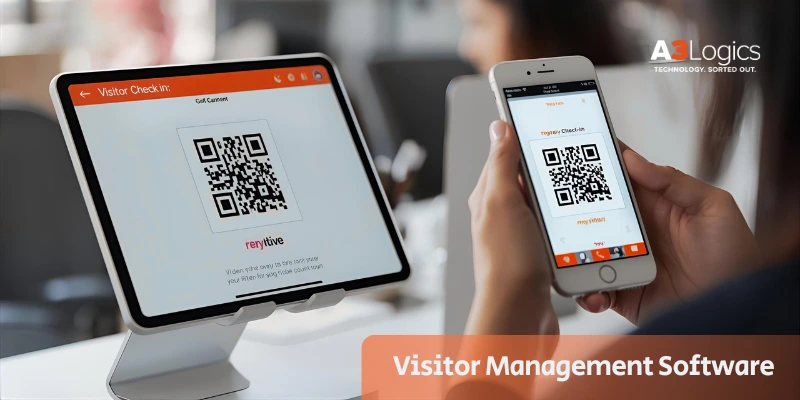
With Visitor Management Software, enterprises can pre-register visitors; assign digital badges; verify identity through biometric or facial recognition; and securely store visit logs in the cloud to ensure safety compliance and an easy reception experience. Advanced visitor management systems, such as AI-based Visitor Management Software, analyze visitor traffic patterns and predict busy times to assist in proper staffing.
Visitor Management Software Market – Key Statistics
The Visitor Management Software growth trajectory has been tremendous over the last few years, with demand continuing to grow due to digital transformation, global safety regulations and changing hybrid work models.
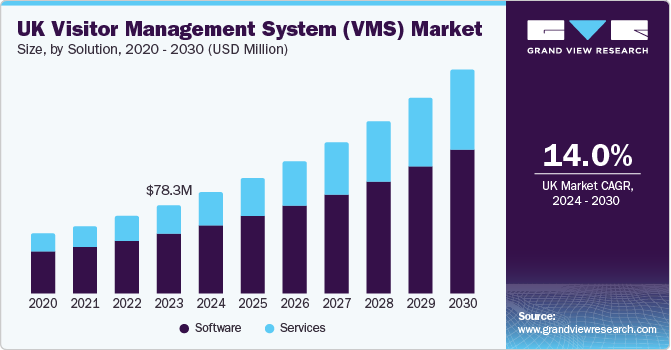
- The global Visitor Management Software Market was valued at greater than USD 1.6 billion in 2023.
- Adoption into Fortune 500 companies was above 70% by 2024.
- AI and IoT-based Visitor Management System Software are projected to grow at a CAGR of 13.4% between 2025 and 2030.
- By 2030, over 80% of enterprise buildings will deploy Visitor Access Management Software across enterprise buildings for real-time identity verification.
All of this data signifies the strategic importance of deploying the right Visitor Management Software System that will deliver scalability, security, and innovation.
How Does Visitor Management Software Work?
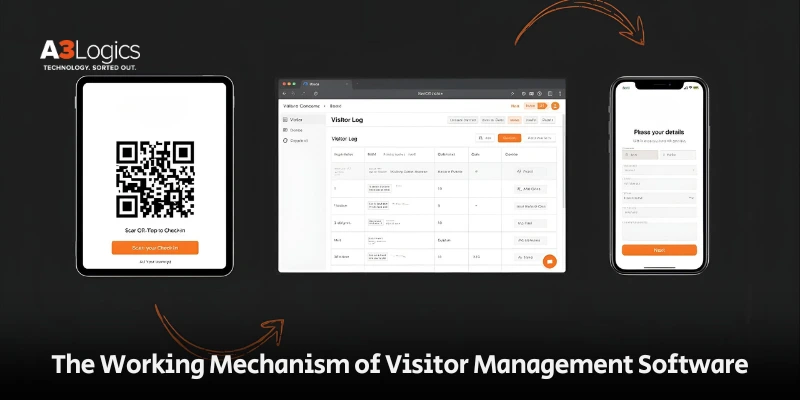
Essentially, a Visitor Management System goes through a multi-step process to verify, capture, and manage all inhabitants of the facility that are coming and going. The process can include data capture, identification, badge issuing, authorization, and analytics. In other words, here’s the simplified manner of the process:
- Pre-Registration: The visitor registers to visit via an online form, or invitation, before their arrival.
- Check-In: The Visitor Management Software records the check-in information using and logging either QR code scanning or biometric identification.
- Verification: The software validates the individual’s credentials using integration with an access control database.
- Badge Issue: The software generates a digital, or printed badge, with visitor name, image, and access level.
- Alerts & Monitoring: The system dashboard alerts security staff, for onsite monitoring, through the Visitor Access Management Software.
- Check-Out: The Visitor Access Management Software subsequently logs, and record, the exact time log visitor checks out and logistic of accurate time-in, time-out record visits.
Additionally, Modern Software for Visitor Management uses artificial intelligence algorithms that analyze visitor wait times, frequency of visits, profiles of returning visitors, and irregular patterns of activity, expanding the users operational insights.
Different Types of Visitor Management Software
Not every organization will have the exact same requirement when it comes to visitor management. Different implementations will look different depending on the structure and size of the organization, as well as requirements for integrations.
1. On-Premise Visitor Management Software
On-Premise Visitor Management Software resides on internal organizational servers. Organizations that have very restrictive data policies often prefer this delivery model as this allows them to exercise full control.
2. Cloud-Based Visitor Management Software
Cloud-based options are current, low-cost, and accessible from all locations. These visitor management software systems enable improved onboarding, remote management, and hassle-free updating.
3. Mobile-Based Visitor Management Software
A visitor management system software with mobility capabilities allows visitors to check-in via their smartphones with QR codes or through contactless access.
4. Web-Based Visitor Management Software
Visitor Management Software that runs in the browser allows the company to maintain visitor records without any hard installation, which is an effective option for companies with a wide office network.
5. Self-Service Kiosk Visitor Management Software
Kiosk-equipped visitor management systems support self-registration with touchscreens, making them an appropriate selection for reception areas of larger organizations with a high volume of visitors.
6. Biometric Visitor Management Software
Visitor Access Management Software that uses fingerprint or facial recognition supports robust identification during entry and exit with security and peace of mind from fraud.
7. Integrated Visitor Management Software
This option uses synchronization with the HR system, access control system, and corporate communication platforms and brings all visitor processes to a single console.
8. AI-Powered Visitor Management Software
AI-Powered Visitor Management Software systems are visiting management systems of the future-by using machine learning, visitors can predict visitation trends, automate signing documents for visits, and enable intelligent policy control based on risk profiles.
Key Features of a Modern Visitor Management System
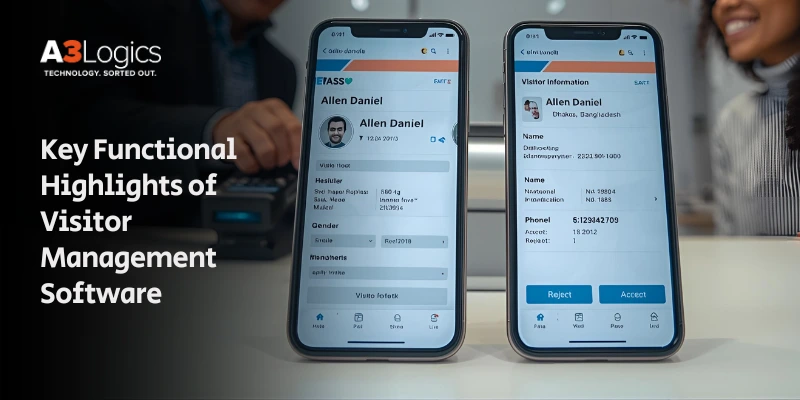
Modern companies require multiple application systems that meet their need for functionality and compliance. Below are the essential functions that characterize progressive Visitor Management Software Development:
1. Digitized Entry Logging
This feature offers the ability to significantly reduce manual work while helping to eliminate errors, as it syncs in real time for optimal awareness.
2. Pre-registration
Pre-registration offers the ability to pre-authorize visitors without restricting their arrival, all with credibility verification through the links shared through email or SMS link.
3. Facial Recognition
By utilizing biometric tools, facial recognition provides highly accurate identification of known or authorized guests at office locations.
4. Badge Printing
The ability to produce visitor badges containing credentials, photographs, or access rights fosters professionalism and security while the visitors wait.
5. Notification & Alerts
Many Visitor Management Software Systems offer instant notifications allowing host notification upon guest arrival.
6. Document & NDA Signing
The ability to digitally sign NDA documents and compliance documentation will allow management to sign before allowing access.
7. Visitor Analytics Dashboard
Assets that provide Visitor Management Software include a dashboard that saves data and is rich in its ability to track visit durations, patterns, and historical records.
8. Emergency Management
In an emergency, the system will track all visitors present via visitor status at an on-site location.
9. Cloud-Based Storage
A cloud-based Visitor Management Software will also allow for decision-making when being saved in the cloud and will guarantee backup recovery capabilities or multi-location access.
10. Integration Able
The ability to integrate to an ERP, biometric scanner, and security applications/architecture will give a Visitor Management Software tool equal footing in strategic functionality.
Core Technologies Used in Visitor Management Software Development
Developing an enterprise-grade VMS requires a combination of modern tools and frameworks. Common technologies include:
- Frontend: React.js, Angular, or Vue.js for intuitive user interfaces.
- Backend: Node.js, Django, or .NET Core for robust logic and scalability.
- Database: PostgreSQL, MongoDB, or Firebase for real-time data access.
- Cloud Platforms: AWS, Azure, or Google Cloud for secure hosting.
- AI & ML Models: Used for face detection, behavior prediction, and anomaly alerts.
- IoT Devices: Sensors and cameras for real-time monitoring.
Top Benefits of Developing a Custom Visitor Management Software for Enterprises
Every company wants to improve security and productivity. Building Custom Visitor Management Software Development ensures the software has precise functionality to comply with the organization’s policies.
1. Increased Security
Real time verification tools ensure that only those authorized to enter can do so, thereby lessening the chances of internal threats.
2. Regulatory Compliance
Visitor management software systems encourage compliance reporting with ready-to-audit digital logs.
3. Brand Professionalism
The connected experience of visitors is reflected in the company’s professionalism and organizational culture.
4. Cost Benefits
Visitor management software automates many manual tasks, thereby reducing human resources, as well as stationary usage.
5. Scalable Software
Cloud Software Monitoring Visitor Management is easily capable of hosting multiple locations with different visitor volumes.
6. Integration Power
Integrating Visitor Access management software with other enterprise systems delivers standardized identity workflows that improve efficiency.
Steps to Develop a Custom Visitor Management Software
Creating a customized Visitor Management Software System proceeds methodically to ensure that the resultant suite of applications is aligned to the goals of the enterprise.
1. Requirement Analysis
An Enterprise Software Development Company starts by defining the scope of the software, such as anticipated visitor counts, integration of access control, and needs around compliance.
2. UI/UX Design
User interface design centers on usability, establishing navigability to accommodate intuitive interactions from both visitors and administrators.
3. Backend Development
The backend developers will prepare secure APIs, connect existing internal systems, and set up centralized storage of visitor data for the Visitor Management Software System.
4. Integration
Assist visitor management software by connecting to hardware ( scanners, gates, cameras, etc) so all departments can use the visitor management software providing connectivity.
5. Testing & QA
The visitor management software will be thoroughly tested for reliability, load, and real world application. The testing phase is thorough to ensure successful launches.
6. Deployment
The completed visitor management software is installed on either the physical site or in the cloud, based on the strategies for deployment.
7. Maintenance & Upgrades
An enterprise can take advantage of Software Consulting Services to maintain compatibility of new devices, update AI models, and upgrades for future use.
Best Practices for Implementing Visitor Management Software in Enterprises
Creating a comprehensive Visitor Management Software System, on its own is only half the battle; properly applying the system will determine whether the organization continues to adopt and utilize the new system as intended for the long run.
Organizations should have a process to ensure the new system truly engages all users with heightened security, compliance, and experience as desired throughout the company’s facilities.
1. Design The Visitor Journey
First, establish how distinct visitor types (client, vendor, contractor, etc.) will journey through the facility. Organize the Visitor Management System Software’s workflows to reflect your security and operational goals.
2. Focus On Security And Compliance
Since personal data is not only gathered but also processed, it is vital for visitor management processes to follow the privacy regulations for the GDPR or CCPA. Utilize Visitor Management Software, designed for success, that encrypts the visitor’s data, actively tracks visitor consent, and hosts an automated deletion policy.
3. Enable Scalable Cloud-based Deployment
Select a Visitor Management Software System that is scalable and cloud-based for flexibility to support operations across multiple locations to allow for enterprise growth without redesigns or reconfigurations.
4. Integrate with Existing Systems
Having a seamless connection with HR solutions, hardware for access control, parking automation, and messaging systems means that your VAM Software is part of an integrated enterprise ecosystem.
5. Focus on User Training & Adoption
Training staff with hands-on training will enable them to understand how the system works. Encourage “super users” in each department to help improve user onboarding and support adoption.
6. Deploy Touchless Check-In Options
Encourage hygiene and convenience of the visitor check-in process with QR-based or biometric visitor check-in, digital badges, and automated host notifications made possible by a sophisticated VAM Software.
AI and IoT Integration in Enterprise Visitor Management Systems
The inclusion of intelligence in AI and IoT has had a profound impact on the development of Visitor Management Software. Intelligent IoT sensors connect data on a visitor’s flow throughout a facility with building automation, and AI enhances the accurate recognition of individuals and enhances real-time decision-making.
An AI-enabled Visitor Management Software System could prompt a facility staff member if a person were attempting to enter a facility that had previously entered multiple times incorrectly, flagging potential threats, and provide predictive occupancy modeling to better track occupancy patterns in a facility.
Integration of IoT-connected gates and smart cameras with Visitor Access Management Software would support the protection of unauthorized individuals beyond check-in with Visitor Management Software. The two technologies would come together to provide a powerful, adaptive, data-rich ecosystem that utilized real-time intelligence.
Future Trends in Visitor Management Software for Enterprises
As companies develop, future Visitor Management Software Systems are expected to include practices of hyperautomation as well as high-level analytics for an overall optimized, safer operation.
1. AI-Powered Predictive Visitor Analytics
Predictive artificial intelligence will enable organizations to optimize staffing and help predict visits using AI Insights modeling.
2. Blockchain-Based Visitor Identity Verification
The Visitor Management Systems Software will use decentralized databases to support a high trust environment that can confirm identities more safely, promoting anti-fraud and tampering potential.
3. Voice Check-ins
Software for Visitor Management will support hands-free compliant and hygienic visitor check-in using voice recognition.
4. Augmented Reality (AR) Navigation Within Offices
Future Visitor Access Management Software will provide interactive indoor mapping for easy navigation for guests.
5. Biometric Authentication at Scale
Advanced multimodal biometrics will ensure seamless authentication with visitors even in distributed enterprise locations.

The A3Logics Advantage in Custom Visitor Management Software Development
A3Logics leads in Visitor Management Software Development and provides personalized, highly secure, and stimulating solutions in the enterprise space. Their in-house team of experts provides end-to-end Software Development Services, including consulting, designing, integrating, and lifecycle management.
As they undertake software development for Enterprises, A3Logics emerges as a trusted advisor to organizations that integrate artificial intelligence, IoT, and cloud technology into their cultures, and adapt their Visitor Access Management Software and Visitor Parking Management Software to meet the differing needs across all industries, such as corporate offices, healthcare, and real estate.
The deep domain knowledge, strategic vision, and comprehensiveness of their team ensures the transition from an old traditional methodology to a modern next-gen digital workplace environment is seamless and meets the governance requirements Enterprise-level organizations need to follow.
Final Thought
At a time of digital agility and data security, Visitor Management Software Systems represent a revolution in companies’ access control. Any company prioritizing operational efficiency, compliance, and brand value would want to make Visitor Management Software Development customized to its own operation to be a strategic priority. With modern AI, IoT, and biometrics, organizations protect and prepare their facilities to provide secure, smart experiences to its visitors.